


Industry Insights
The Culture of Giving Christmas Greeting Cards to spreads the Warmth of Words in a Season of Joy
Christmas is a season filled with warmth, gratitude, and heartfelt connections. Beyond the gifts and decorations, the simple act of sending a Christmas card has become a timeless tradition that bridges hearts across distances. Each handwritten message carries not only festive cheer but also a reminder of love, appreciation, and togetherness values that define the true spirit of Christmas.
The Origin of Christmas Greeting Cards
The tradition of sending Christmas cards dates back to the mid-19th century in England. Sir Henry Cole, a British civil servant, is credited with commissioning the first commercial Christmas card in 1843, featuring the message “A Merry Christmas and a Happy New Year to You.” The idea quickly spread throughout Europe and America, becoming a beloved seasonal custom. Early cards were hand-painted or printed with festive imagery such as holly, snow, and nativity scenes. Over time, this practice evolved into a universal gesture of goodwill, bridging hearts across miles and generations. Each Christmas, millions of cards are exchanged — proof that this tradition continues to thrive, carrying messages of love, hope, and kindness through every fold and color.
Why the Tradition Became So Popular
As industrial printing expanded, Christmas cards became accessible to everyone. They were not only beautiful pieces of art but also practical ways to maintain connections in an increasingly busy world. By the early 20th century, exchanging cards had become an essential part of holiday celebrations in Western countries. People enjoyed selecting designs that reflected their personal style — from religious themes to joyful depictions of Santa Claus, reindeer, and Christmas trees. Sending cards was, and still is, a way to pause amid the rush of the season, to say “I’m thinking of you” in the most genuine way. Even with modern technology, the act of giving a physical card endures because it represents thoughtfulness and effort — two things digital messages rarely achieve.
Who Should Give and Receive Christmas Cards?
Christmas cards are for everyone among family, friends, colleagues, neighbors, and even business partners. Within families, they express affection and gratitude; among friends, they convey joy and memories; in the workplace, they build goodwill and strengthen professional relationships. Many businesses also send Christmas cards to clients and partners, not only as a form of courtesy but as a meaningful gesture of appreciation. For some, receiving a Christmas card from someone far away can mean more than an expensive present. It’s a reminder that even across continents and time zones, someone took the time to write your name, choose a design, and send a heartfelt message. That human touch makes all the difference.
The Deeper Meaning Behind Giving Christmas Cards
Beneath the surface, the culture of giving Christmas cards reflects universal human needs of connection, remembrance, and gratitude. In a world increasingly driven by speed and screens, a handwritten card becomes a pause, a moment of mindfulness. Each message, whether short or long, is a piece of sincerity frozen in ink. It says, “You matter to me.” Christmas cards help us slow down, appreciate others, and relive the warmth of shared moments. They are not just seasonal decorations but emotional bridges that tie people together, from the elderly who cherish memories, to the young who discover the joy of giving. Behind every envelope is a story of love and care, quietly carrying the timeless spirit of Christmas.
The Art of Modern Christmas Card Design
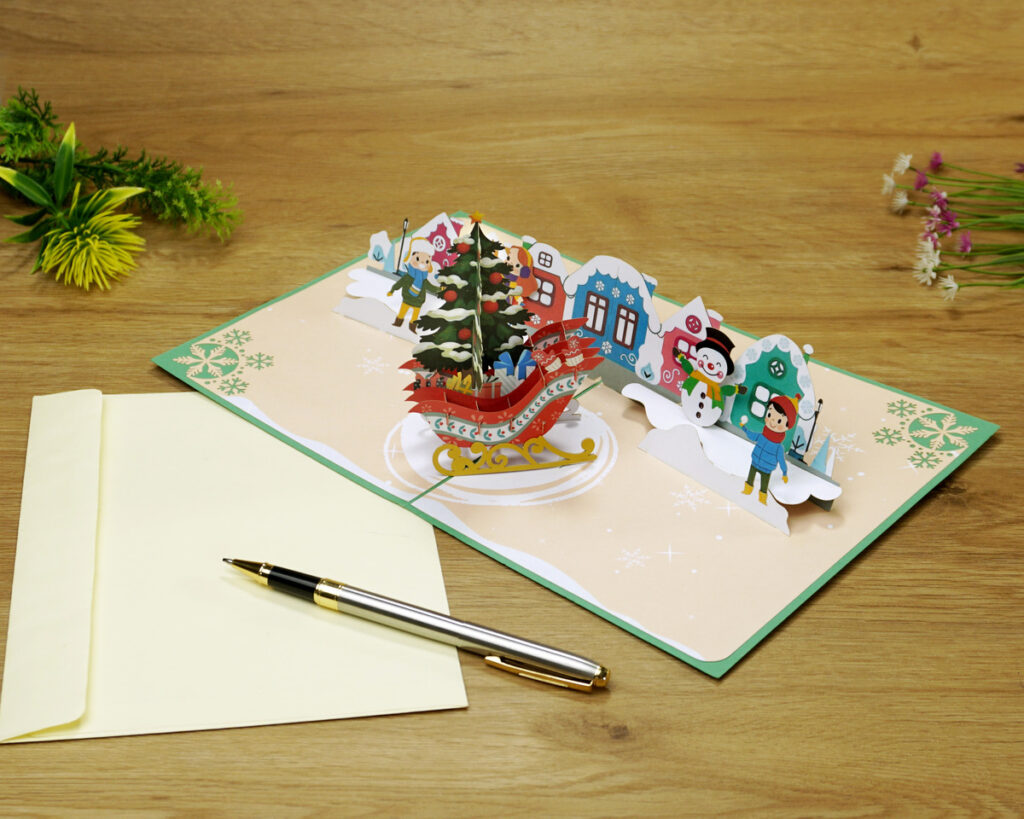
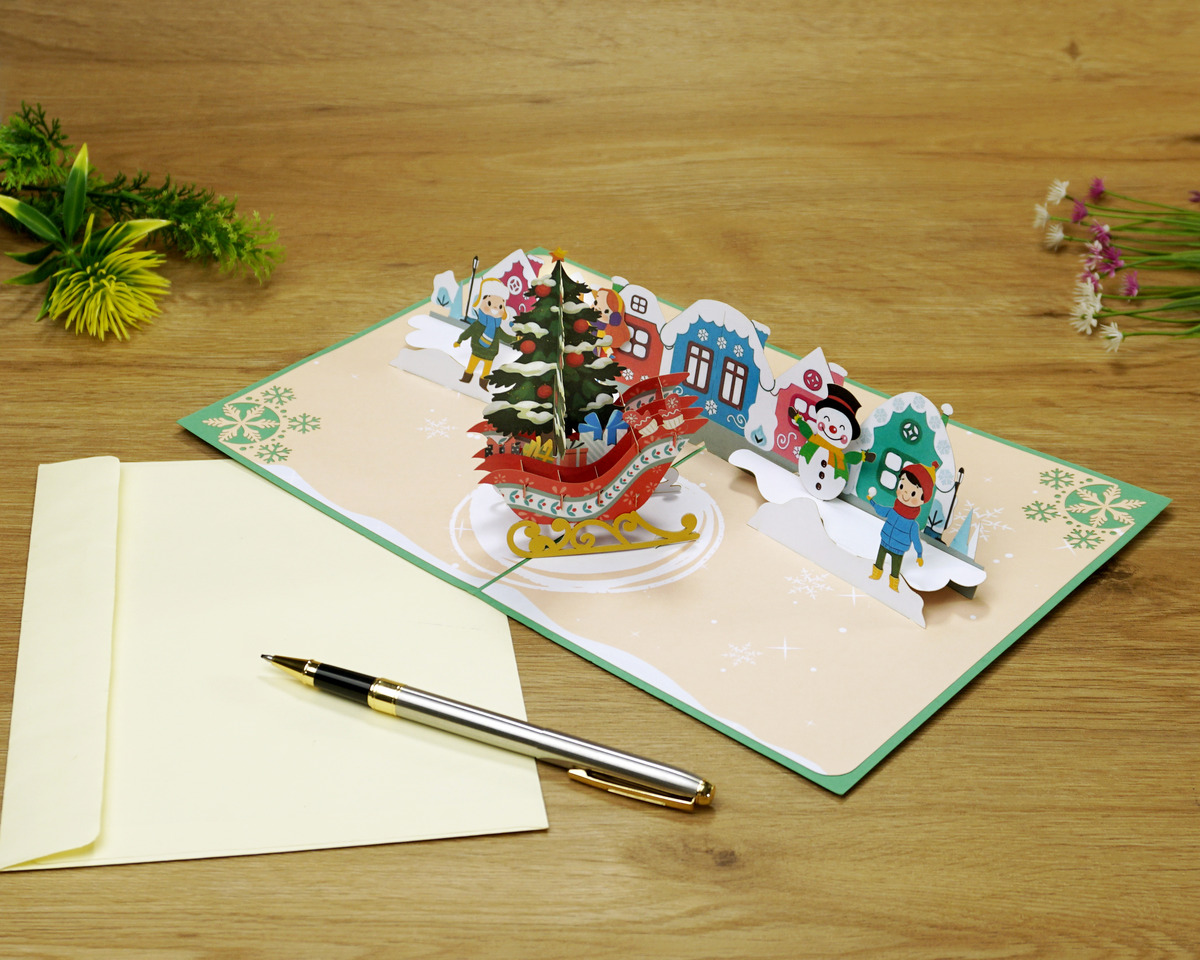
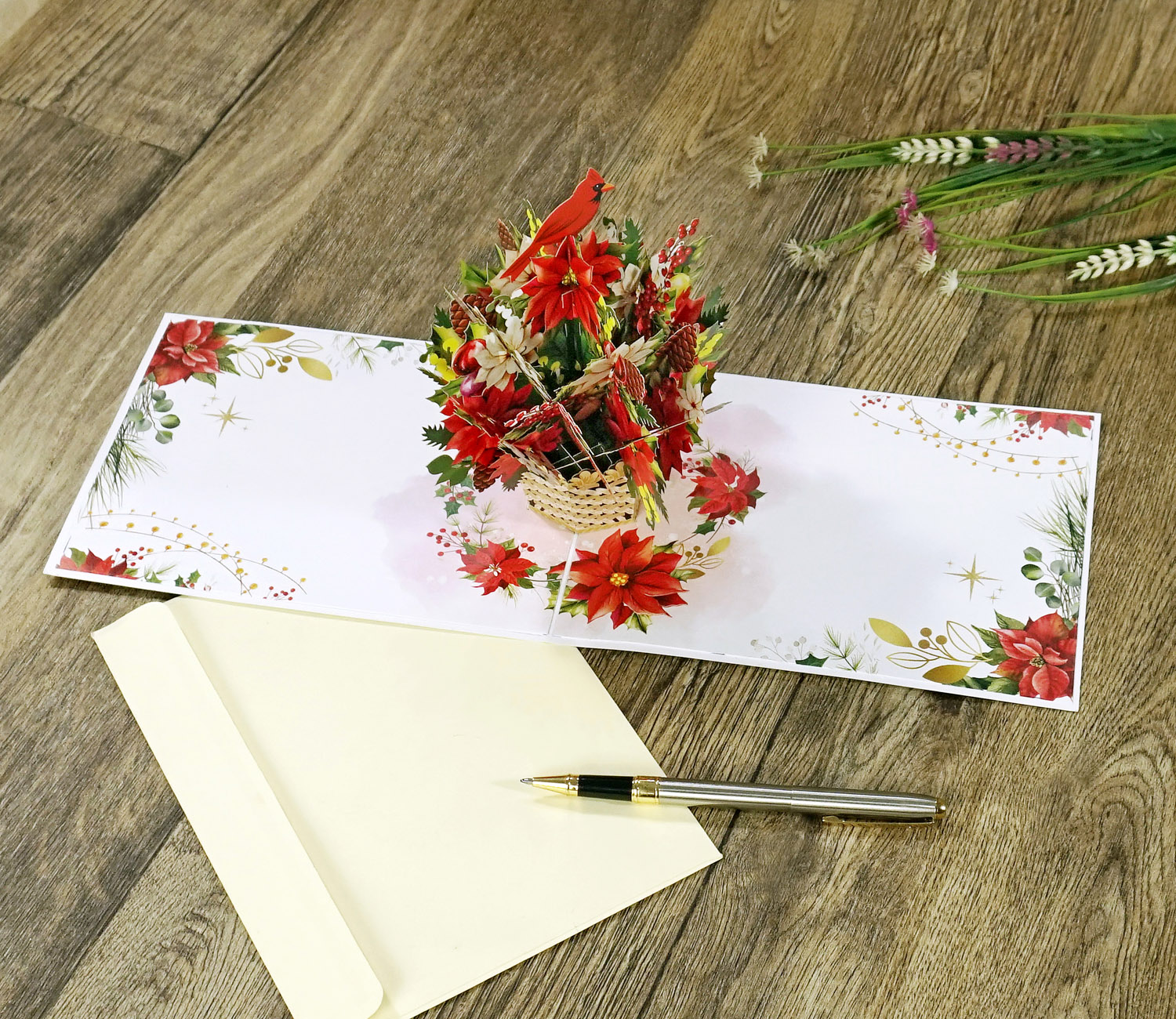
Modern Christmas cards have evolved beyond the classic paper fold. Today, they come in countless creative forms embossed, hand-painted, digital animations, and especially 3D pop-up cards. These designs open into miniature worlds: snowy villages, Christmas trees, Santa’s sleigh, or nativity scenes that seem to come alive. Crafted with intricate laser cuts and vivid colors, 3D pop-up cards transform a simple greeting into a small work of art. They can be displayed as home decor, treasured as keepsakes, or passed on as symbols of joy. This fusion of tradition and innovation keeps the Christmas card culture fresh and engaging, a perfect blend of nostalgia and modern artistry that continues to captivate people of all ages.
The Social and Emotional Value of This Tradition
At its heart, sending Christmas cards is an act of kindness. It encourages empathy, reflection, and emotional connection, all essential in a fast-changing world. A card can rekindle relationships, heal misunderstandings, or simply make someone smile. On a social level, it strengthens communities and preserves the warmth of human interaction in an increasingly digital era. For businesses, sending cards represents not only good manners but also emotional intelligence, recognizing that trust and loyalty are built through genuine gestures. For individuals, the joy lies in giving choosing, writing, and sharing something beautiful without expecting anything in return. That’s the quiet yet profound message that Christmas cards continue to convey.
3D Christmas cards bring warmth from handwritten wishes
In every card sent during Christmas, there’s a piece of someone’s heart. The beauty of this tradition lies not in perfection, but in presence in the act of remembering, writing, and sharing. Whether it’s a 3D pop-up masterpiece, a handmade card, or a simple printed note, each one carries the power to brighten someone’s day. Amid the glitter of gifts and the rush of celebrations, the Christmas card stands as a symbol of something deeper: the desire to connect, to give thanks, and to spread peace. So this season, before you scroll through endless digital greetings, take a moment to send a card. Because sometimes, the smallest gesture a few written words can deliver the greatest warmth
 3D Facility Virtual Tour
AUTHOR
Hana Phung
As the co-founder and Vice Director of HMG, Hanna Phung stands at the forefront of a decade-long journey dedicated to bringing joy through innovative pop-up card designs. With her visionary leadership, Hanna, alongside her accomplished team, has crafted ...Read More
BLOG
Maybe You Are Interested
Manufacture 3D Pop-Up Business Cards on your Design and Personalize Brand
In business, a first impression can be the beginning of a lasting relationship. A business...
Read more...Back in Los Angeles: What Our Second Alibaba.com CoCreate Taught Us About Sourcing in the AI Era
In September we packed our sample library into suitcases and flew from Hanoi to Los...
Read more...Rooted at the Border: HMG Supports the “Border Bamboo Rampart” in Lai Châu
On 29 September 2026, at Huổi Luông Border Guard Station in Lai Châu, in Vietnam’s...
Read more...Bringing the Story of Vietnamese Craftsmanship to an International Trade Fair in Hong Kong
A small pop-up card, light enough to sit in the palm of a hand, yet...
Read more...Appreciation Into a Memorable Brand Experience with 3D Popup Card
As the year comes to a close, businesses naturally begin looking back at what they...
Read more...HMG Celebrates Children’s Day 2026 with Gifts for Employees’ Children
At HMG, we believe that a caring workplace extends beyond our employees to the families...
Read more...