



In the world of handcrafted gifts and paper based décor, the value of a product is no longer defined solely by its final appearance. For modern B2B buyers, the journey from raw material to finished piece has become just as important as the product itself. This full process is often referred to as the paper to product journey, a concept that captures every stage from initial idea to hand assembled masterpiece.
Wholesale buyers, retail brands, and corporate sourcing teams increasingly want to understand how products are made, who is involved, and what standards guide production. This shift is closely tied to growing expectations around transparency, ESG commitments, and respect for craftsmanship. Buyers want assurance that products align with ethical values while maintaining consistent quality.
Understanding the complete journey also allows buyers to clearly distinguish between handcrafted vs machine-made gifts. Without visibility into the process, many products appear similar on the surface. When the journey is documented and communicated, the difference becomes measurable and credible. This article explores each stage of the paper to product journey, from sketch to final assembly, and explains why it matters for B2B decision making.
Concept and Sketch Where Every Paper Product Begins
Every paper product begins as an idea. The concept phase defines the purpose, form, and emotional intent of the product. In handcrafted paper goods, concept design focuses not only on visual appeal but also on how the product will be physically constructed by hand.
Concept and Sketch Where Every Paper Product Begins
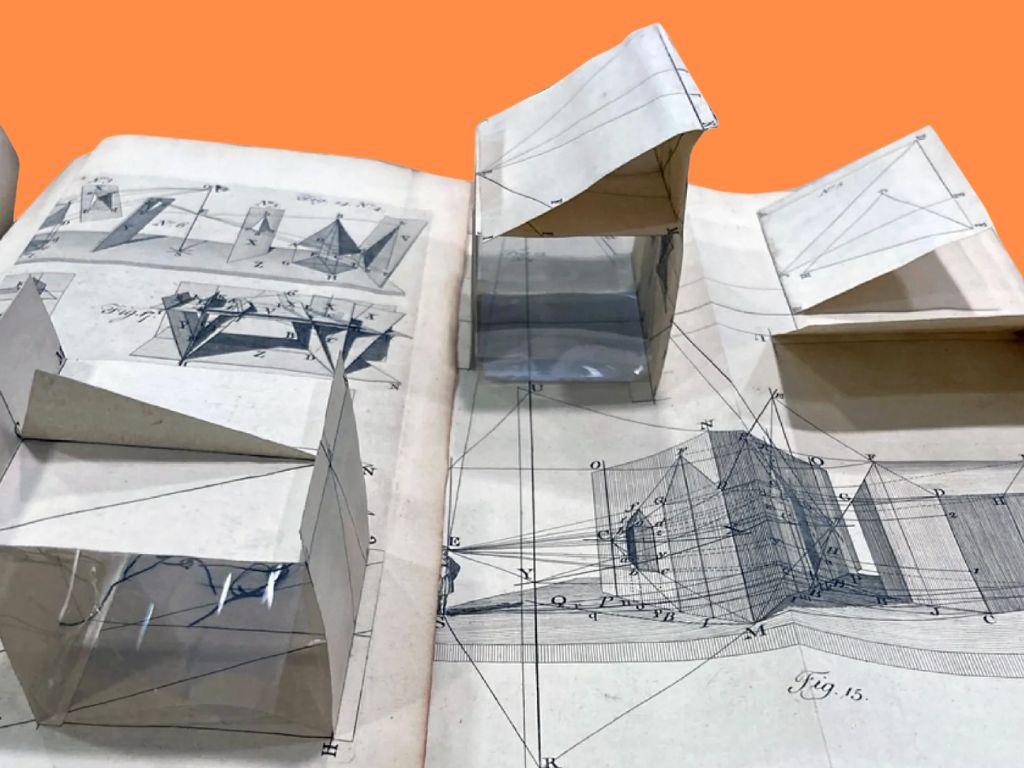
Sketching plays a critical role at this stage. Hand drawn sketches allow designers to think through structure, layers, and assembly logic in a tactile way. Digital design tools are often used later, but early sketches remain essential because they reflect how the product will be handled, folded, and joined by artisans.
A well developed sketch communicates proportions, balance, and feasibility. It reveals whether a design can realistically be assembled by hand without compromising quality or efficiency. Sketches created for handcrafted products differ from those intended for industrial production. Handcrafted designs account for human movement and manual precision, while industrial sketches prioritize automation and uniformity.
Material Selection Ethical and Functional Paper Sourcing
Material selection is one of the most decisive stages in the paper to product journey. The choice of paper affects durability, appearance, assembly behavior, and environmental impact. For premium handcrafted paper products, material decisions must balance functionality with values.
Many brands now prioritize ethical sourcing Vietnamese crafts as part of their supply strategy. Vietnam has a strong tradition of paper craftsmanship, supported by skilled artisans and responsible sourcing practices. Sustainable paper options often include FSC certified paper, recycled fiber paper, and specialty paperboard designed for manual assembly.
Key criteria for selecting paper include fiber strength, flexibility for folding and cutting, compatibility with adhesives, and environmental responsibility. The paper chosen directly influences how the brand is perceived in the B2B market. Ethical sourcing reinforces credibility and positions the product as a responsible and premium offering.
Paper Engineering Turning Flat Sheets into Structure
Paper engineering is the discipline that transforms flat sheets into three dimensional forms. In handcrafted production, paper engineering determines whether a product is strong, stable, and visually refined.
Common techniques include layering to add depth, folding to create structure, slot and tab systems to avoid excessive adhesives, and reinforcement methods that strengthen stress points. These techniques are carefully designed to be executed by hand with consistency.
Designs intended for hand assembly differ significantly from those developed for machines. Hand assembly designs allow tolerance for slight variation while maintaining overall integrity. This adaptability becomes a competitive advantage in B2B contexts where customization and flexibility are valued.
Prototyping and Testing From Idea to Physical Form
Prototyping bridges the gap between concept and production. A prototype allows designers and artisans to test how the product behaves in real conditions. This includes evaluating structural strength, ease of assembly, and visual consistency.
During prototyping, designs are adjusted based on actual hand movements and assembly time. Artisans provide feedback that improves efficiency and reduces error. Prototypes also help define quality benchmarks that guide production.
This stage is essential for meeting quality control paper products B2B expectations. Without thorough prototyping, inconsistencies multiply during production. Prototypes establish reference standards that ensure every unit meets the same criteria.
Hand Assembly The Core of Craftsmanship
Hand assembly is the heart of handcrafted paper products. This stage involves multiple manual steps such as folding, gluing, aligning, and shaping components into a finished piece. Each step requires attention, dexterity, and experience.
The number of hand performed operations is significantly higher than in machine production. Artisans apply judgment and precision that machines cannot replicate. This is where the distinction between handcrafted vs machine-made gifts becomes most evident.
Hand assembly adds emotional and aesthetic value. Slight variations reflect human involvement and elevate the product beyond mass production. For B2B buyers seeking differentiation, this craftsmanship becomes a key selling point.
Ethical Labor and Craft Communities in Vietnam
Vietnam plays a vital role in the global supply of handcrafted paper goods. Many workshops operate within established craft communities where skills are passed down through generations. These environments prioritize training, fair labor conditions, and skill development.
Through ethical sourcing Vietnamese crafts, brands support local economies and preserve traditional craftsmanship. Ethical labor practices ensure stable employment, safe working conditions, and fair compensation.
International brands choose Vietnam not only for cost efficiency but also for the depth of expertise available. Ethical labor practices directly influence product quality because skilled and valued artisans produce more consistent and refined work.
Quality Control in Hand Assembled Paper Products
Quality control in handcrafted production is more complex than in industrial manufacturing. Variation is inherent in manual processes, which makes systematic oversight essential.
Key control points include assembly accuracy, adhesive application, alignment, and overall balance. Consistency across units is monitored through visual inspection and functional checks.
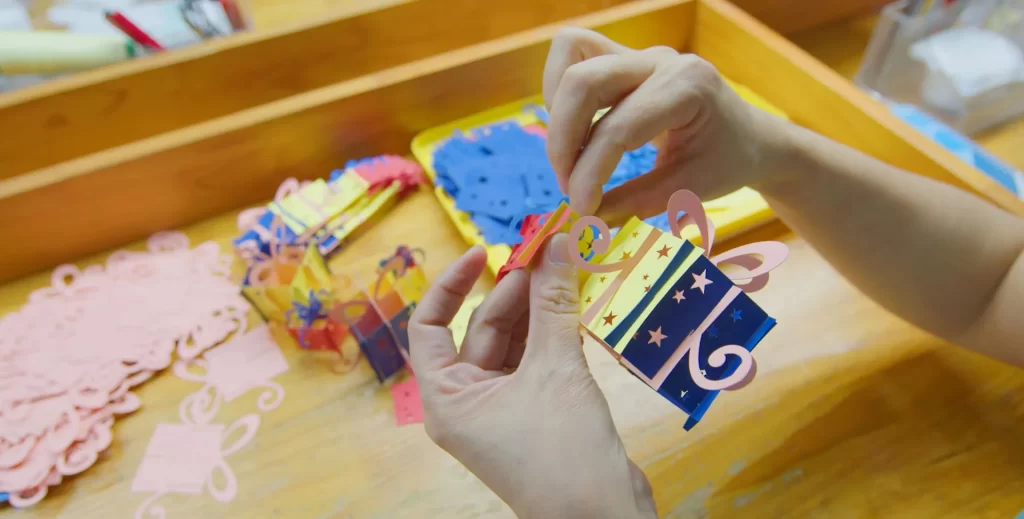
Quality Control in Hand Assembled Paper Products
Effective quality control paper products B2B systems rely on trained supervisors, standardized reference samples, and documented procedures. The goal is to minimize defects while preserving the handcrafted character that defines the product.
Finishing Touches Detailing Packaging and Presentation
Finishing is where the product achieves its final expression. This stage may include edge refinement, surface detailing, and final adjustments performed by hand. Finishing has a strong influence on perceived quality and premium appeal.
Packaging plays an equally important role in B2B products. It protects the item during transport while reinforcing brand values. Sustainable packaging choices ensure that finishing does not compromise recyclability.
Unlike mass produced goods, handcrafted paper products require finishing that respects both craftsmanship and environmental responsibility.
Scaling Without Losing Craft Integrity
Scaling handcrafted production presents unique challenges. Increasing volume without shifting to machine production requires careful planning and process control.
Standard operating procedures help align artisans without eliminating individuality. Training programs ensure that new team members maintain established standards. Scaling done correctly protects brand identity and craftsmanship.
Brands that scale thoughtfully preserve long term value and avoid dilution of quality.
Why B2B Buyers Value the Full Paper to Product Journey
B2B buyers evaluate more than price. They assess reliability, ethics, and long term brand alignment. The paper to product journey provides a transparent narrative that supports purchasing decisions.
Storytelling becomes a sales tool. When buyers understand the process, they gain confidence and justify premium pricing. This transparency also supports ESG reporting and supplier audits.
Understanding the journey enables buyers to clearly identify handcrafted vs machine-made gifts and choose products that align with their brand values.
Common Misconceptions About Hand Assembled Paper Products
A common misconception is that handmade products lack durability. In reality, engineered paper structures can be highly robust. Another myth is that handcrafted production lacks quality control. Structured oversight disproves this assumption.
Paper products are often perceived as fragile, yet when designed properly, they perform reliably in retail and gifting environments. These misconceptions persist when the journey is not explained.
How Brands Can Communicate This Journey Effectively
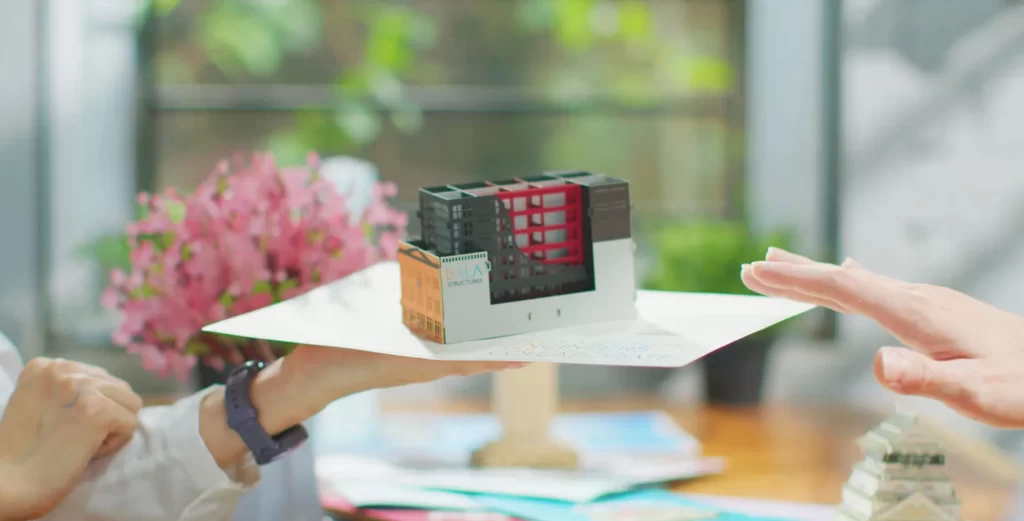
Brands should document each stage of the journey using images, videos, and diagrams. Showing real processes builds trust. Integrating this narrative into catalogues, websites, and presentations strengthens perceived value.
Storytelling humanizes the product and differentiates it in crowded B2B markets. The journey becomes part of the brand strategy rather than a background detail.
The Competitive Advantage of Hand Assembled Paper Products
Hand assembled paper products offer customization, sustainability, and emotional appeal. They align with the growing demand for responsible gifting and differentiated offerings.
In B2B markets, these advantages translate into stronger positioning and customer loyalty. The documented journey reinforces premium status and protects margins.
Conclusion From Paper to Masterpiece
The paper to product journey reveals the true value behind handcrafted paper goods. From concept and sourcing to assembly and quality control, each stage contributes to the final masterpiece.
Human skill remains central to this process. For B2B buyers, understanding the journey enables better decisions and stronger partnerships. Brands that evaluate products based on process rather than price alone position themselves for long term success.
 3D Facility Virtual Tour
AUTHOR
Hana Phung
As the co-founder and Vice Director of HMG, Hanna Phung stands at the forefront of a decade-long journey dedicated to bringing joy through innovative pop-up card designs. With her visionary leadership, Hanna, alongside her accomplished team, has crafted ...Read More
BLOG
Maybe You Are Interested
3D Mother and Child Card – A Meaningful Gift for Mother
There are moments when you want to say something truly meaningful to your mom—but somehow,...
Read more...Unlock Savings: Your Guide to Finding the Best Business Cards Wholesale Deals in 2026
Thinking about getting new business cards? In 2026, just handing out a plain old rectangle...
Read more...Finding the Best Business Cards Supplier for Your Company
Picking the right business cards supplier can feel like a big deal. You want something...
Read more...Why Leading Brands are Choosing Bespoke 3D Popup Card this March 8th
Every year, as International Women’s Day approaches, my desk is filled with orders for 3D...
Read more...Creating Shareable Moments: How Pop-Up Products Drive Social Media Traffic
Social media has become one of the most powerful drivers of product discovery, brand awareness,...
Read more...Sourcing Resilience: Navigating Supply Chain Stability for Seasonal Gifts
Seasonal gifts present a unique set of sourcing challenges that differ significantly from year-round product...
Read more...